


Get in touch with us at info@new.com
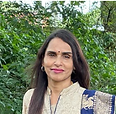
Ronicka Mudaly is an Associate Professor and Deputy Leader in the Science and Technology Education Cluster at the University of KwaZulu-Natal, South Africa. She was the invited plenary speaker at the 3rd BRICS Young Scientists Forum and has been appointed by the Government Department of Planning, Monitoring and Evaluation (DPME), National Research Foundation (NRF), and Government Technical Advisory Centre (GTAC) to develop the Covid-19 Country Report, which was presented to Cabinet in January, 2025.
Her research aim is to explore ways in which science education can contribute towards epistemic and social justice. The role of neoliberal ideologies, especially in STEM education, in ensuring the flourishing of the economically elite, at the expense of planetary well-being, is among her research foci. She has made a substantive and significant contribution to this emerging nexus area, which is demonstrated by her publications and intellectual leadership.
ORCID: https://orcid.org/0000-0002-7347-2098
E-mail ID: mudalyr@ukzn.ac.za, Phone Number: (27)842450676
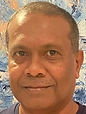
Prof. Vimolan Mudaly is a Professor in the Department of Mathematics in the School of Education at the University of KwaZulu-Natal. He is considered by his peers to be an expert in Mathematics Education and specifically in the area of visualisation in mathematics. He has made a substantive and significant contribution through a cogent body of work in both visualisation and active learning in mathematics.He began his career as a school educator and served as an examiner of the National Senior Certificate examinations. He also served as the Chairperson of the Association of Mathematics Educators in South Africa, KwaZulu-Natal sector. He has established a national and international profile and is considered a senior in his discipline at the School of Education. He has located himself within the research field of Visualisation, which is an emerging area. In a short period of time, he has managed to partner with leading researchers (nationally and internationally) and has established useful links for future collaboration. He was the chairperson of the team that wrote the chapter on education. He has graduated more than 50 master's and PhD students and has published more than 60 papers and book chapters.
ORCID: https://orcid.org/0000-0003-3570-1256,
E-mail ID: mudalyv@ukzn.ac.za, Phone number: (27)829770577

Dr. Narendra D. Deshmukh worked at Homi Bhabha Centre for Science Education (HBCSE), a national centre of the Tata Institute of Fundamental Research (TIFR), Mumbai, India as Senior Scientific Officer-F for 34 years and superannuated on April 30 2025. He has M.Sc (Animal Physiology), M. Ed, M.A and M.Phil (Education), Ph D (Education) and MBA (HR) degrees. He completed his Postdoctoral study from Marang Centre for Maths and Science Education, Wits School of Education, Johannesburg, South Africa.His research areas are: Students’ Conceptions and Misconceptions, Open Educational Resources, Activity Based Science Learning, Critical thinking skills, Participatory Action Research, Topic Specific Pedagogical Content Knowledge and interested in Tribal & Rural Education, Health Education, Biology Education and Teacher Education. He is the author of 6 books, participated in 4 books and 6 courses, 3 technical reports. Dr Deshmukh organised 26th Biennial Conference of the Asian Association for Biology Education at Goa, India from September 20 -23, 2016 on: Trends in Biology Education & Research: Practices & Challenges. Currently Dr Narendra D Deshmukh has been working on State Curriculum Framework-School Education 2024, State Board School Science Syllabus and Grade 9 & 10 Science textbook writing. Dr Deshmukh has conducted graduate courses for research scholars on Teaching Overview cum Practicum and Understanding Teaching Practices, where emphasis is on Pedagogical Content Knowledge (PCK) and Topic Specific Pedagogical Content Knowledge (TSPCK), at HBCSE-TIFR, Mumbai, India.
ORCID: https://orcid.org/0000-0001-9190-7596
Email: nddeshmukh1965@gmail.com, Phone number: +91 9867167951 or 9869236231

Dr. Abhishek Tripathi, PCS Uttarakhand Provincial Civil Services (Executive Branch) Ph.D. (Botany), M.Sc. (Life Sciences-Plant Science) ICAR (ASRB) NET (Biotechnology Agricultural Science) CSIR-UGC NET (Life Sciences) Master of Arts (M.A.) Rural Development Master of Business Management (M.B.A.) Infrastructure Management. Presently he working as Chief Development Officer, Chamoli Government of Uttarakhand, Dehradun, India. He is director of Herbal Research Development Instritute, Mandal, Gopeshwar, Chamoli.

Dr. Rakesh Gairola, is a visionary educator, social reformer, and grassroots innovator whose lifelong dedication to the Himalayan region has empowered communities through education, sustainable development, and scientific engagement. As the patron of Subodh Prem Vidya Mandir in Gopeshwar, he established a child-centered institution 46 years ago that blends scientific temperament with rich cultural values of the Himalayas. He pioneered the Gyan Ganga Total Literacy Programme in Chamoli and founded Ghanshyam Smriti Pahari Food in Sagar, a rural enterprise that benefits over 487 village farmers by organizing the local economy around hill-specific models using indigenous resources. His leadership extended to national platforms as the former General Secretary of Bharat Gyan Vigyan Samiti, Uttar Pradesh, and President of its in Uttarakhand, as well as a National Executive Committee member of the All India People's Science Network. He also initiated an autonomous cooperative society supporting teachers, artisans, and farmers, and is currently spearheading the Himalayan Institute of Village Wealth Management in Village Sagar, which aims to promote biodiversity conservation, environmental awareness, and lifelong learning. Dr. Gairola mission is deeply inspired by Mahatma Gandhi’s vision that “the soul of India lives in its villages,” and his work embodies the principles of Swalamban (self-reliance), Suraj (good governance), and Swaraj (self-government), striving to build Gram Gan Rajya (ग्राम गण राज्य)—a true democracy governed by empowered village panchayats.

Mr. Rajesh B. Patil, is a Teacher and Numismatics, Maharashtra. He is working on exploring environmental focus through numismatics. Project work for Environmental Science utilized to create learning resources for interdisciplinary approach at school level. He is creating Innovative learning resources using numismatic, philately and phillumeny for the secondary and higher secondary classes in assistance with the society.

Dr. Sandhya A. Thakur, is a Ex. Lecturer and Environment Educationist, Mumbai. She is a Biology educator and researcher with 38 years of teaching at S.K. Somaiya Junior College and experience as Visiting Scholar at Homi Bhabha Centre for Science Education (HBCSE). She is specialized in innovative, multimodal, and affordable teaching practices in science. She actively mentors students from underprivileged backgrounds, develops accessible science toolkits, and trains teachers through workshops and conferences. Dr. Sandhya A. Thakur Published her work in leading journals and presented at international forums.

Dr. Suresh Pande has provided leadership to many organizations and continues to pursue excellence in science for improving crop productivity, food security and conservation of the environment. He is currently the President of SEED, Society for Empowerment through Environment Development, promoting organic and natural agriculture and recycling of crop residues for growing mushrooms and flowers.
Dr. Pande has done his PhD from Indian Agricultural Research Institute and Gold Medalist in MSc. He is the author of more than 500 scientific papers, books, book-chapters and information bulletins. He is a Fellow of several professional Societies. His research profile includes temperate, tropical and semi-arid-tropical crops, Mushrooms, flowers, vegetables and also has good knowledge and experience in hydroponics. He has received several national and international awards, including Doreen Margaret Mashler Award (Thrice), the King Baudouin Award (Twice), and Outstanding Scientific article award (Four Times). He has also received Distinctive Scientific Achievements Awards and Letter of Honors and Outstanding Scientific Achievement Awards for Grain Legumes R&D in Nepal, Bangladesh, and India.
Keynote Speakers